

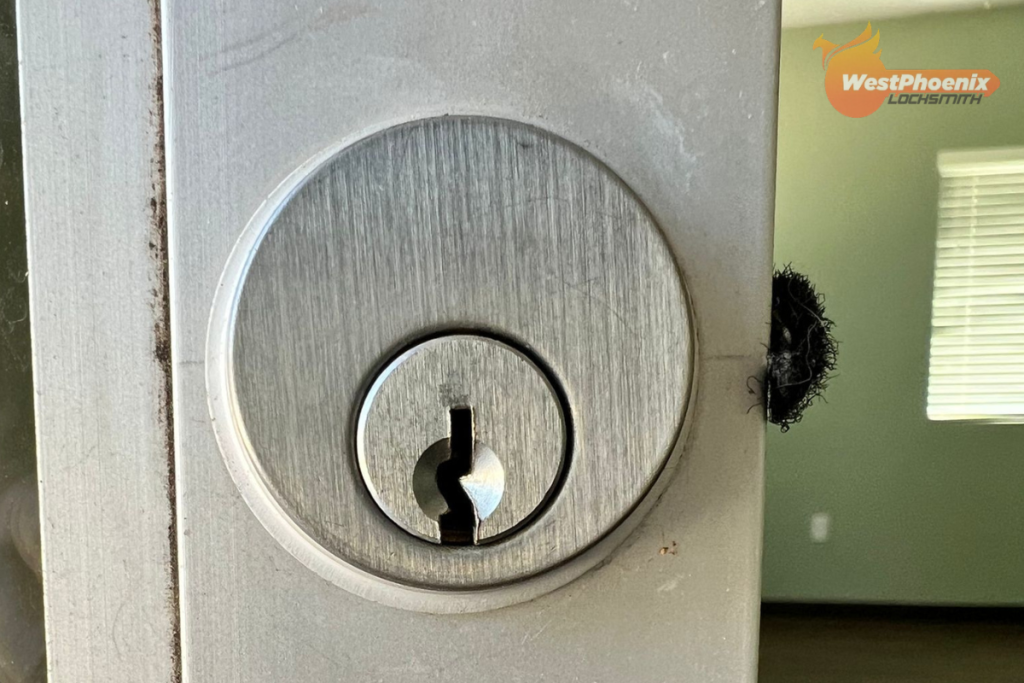
Rekeying preserves the lock chassis while changing the internal pinning combination to reject old keys; replacement swaps the entire assembly. From a metallurgical standpoint, you should only rekey if the cylinder plug maintains a tolerance of less than 0.005 inches of rotational “play” and the bible springs retain their compressive force. If the keyway is worn wide enough to accept a screwdriver tip, or if the latch bolt has developed a dead spot due to spring fatigue, rekeying is a temporary patch on a failing mechanical system.
The Anatomy of the Decision: Tolerance and Wear
The decision between residential lock change and rekeying is not about aesthetics; it is about the integrity of the shear line. A standard pin tumbler lock relies on the precise alignment of five or six bottom pins (key pins) and top pins (driver pins). When the correct key is inserted, the gap between these pins aligns perfectly with the edge of the plug (the cylinder that turns). This is the shear line.
In Arizona, we face a unique abrasive factor: silica dust. The fine grit found in Buckeye and Surprise works its way into the keyway. Every time you insert your key, you are effectively sanding the brass pins and the walls of the lock chamber. Over ten years, this abrasion widens the chambers.
If I insert a fresh key into a cylinder and can wiggle it vertically more than a few millimeters, the chambers are “egged” out. A residential lock repair via rekeying will not fix this. The new pins will still wobble in the widened chambers, leading to misalignments where the key sticks or refuses to turn. In this scenario, the hardware must be replaced.
When Rekeying is the Correct Technical Solution
If the hardware is mechanically sound (ANSI Grade 1 or 2), rekeying is the standard protocol for access control. This is the primary service we perform for new homeowners in Glendale and Laveen who want to ensure the previous owners (or their contractors) cannot enter.
The Rekeying Process
- Disassembly: We remove the cylinder from the housing.
- Dump: All existing bottom pins are removed.
- Decoding: We cut a new key or select a new code.
- Pinning: We insert new brass pins that correspond to the depths of the new key cuts.
- Validation: We test the plug rotation to ensure no “drag” exists at the shear line.
This process is cost-effective and secure, provided the lock housing isn’t cracked. We frequently perform business rekey services for offices that have high employee turnover but high-quality commercial levers that are too expensive to replace annually.
The Hidden Danger: Construction Master Wafers
One specific reason we often recommend a full re-pinning (rekey) on new tract homes in Laveen is the presence of “construction keying.”
Builders use a system where a master key opens all homes during construction, and the homeowner’s key “locks out” the builder key upon first use. This works by using tiny circular wafers (master balls) in the pin stack. When the homeowner’s key is used, these tiny balls are pushed into a capture hole in the plug, theoretically disabling the builder key.
However, these wafers often get stuck or leave the lock vulnerable to “key bumping” or picking. The shear line is now created by multiple gaps, reducing the pick resistance of the cylinder. When we perform a commercial rekey or residential service, we strip these wafers out completely. We restore the cylinder to a single shear line, significantly increasing physical security.
Hardware Replacement: Identifying Catastrophic Failure
You must replace the lock when the chassis fails. The chassis is the body of the lock that retracts the latch or throws the bolt.
1. The “Drooping” Lever
In commercial settings, specifically heavy-traffic doors in Tempe, we see return springs break. The door handle sags. This is not a cylinder issue; it is a fatigue failure of the internal cassette. Rekeying won’t lift the handle. You need commercial door lock installation to replace the entire lever set with a fresh spring cage.
2. Deadbolt “Spinning”
If you turn your deadbolt thumbturn and it spins freely without moving the bolt, the tailpiece (the flat metal bar connecting the cylinder to the bolt) has sheared or disconnected. This often happens when a door is misaligned, and the user forces the bolt into the jamb. The metal fatigues and snaps. We can sometimes replace just the tailpiece, but often the cam interface is stripped. A full residential door lock replacement is required to restore the throw mechanism.
3. Weather Corrosion
In Goodyear, we see sun-baked locks where the lubricant has vaporized and the zinc cam has corroded. The internal mechanism seizes. If we try to rekey this, the follower tool won’t even slide through the plug. The corrosion welds the pins to the walls. These locks must be drilled and replaced.
High-Security Considerations: Kwikset SmartKey vs. Traditional Pin Tumbler
We encounter many “SmartKey” cylinders in the Valley. These do not use top and bottom pins; they use a sidebar and a guide wafer system that allows the owner to rekey the lock themselves.
While convenient, these cylinders cannot be traditionally picked or rekeyed by a locksmith using a pin kit. If a SmartKey cylinder jams (a common occurrence if the rekeying step is done imperfectly), the lock often fails in a locked state. We cannot simply shim it open. We often have to destroy the cylinder to open the door, necessitating a residential lock change.
For customers seeking durability, we recommend replacing these with traditional pin tumbler locks (like Schlage C-keyway) that allow for manual key duplication services and precise servicing.
Commercial vs. Residential Grades
The tolerance for wear differs by application. A residential Grade 3 deadbolt has loose tolerances. It rattles. A commercial lock (Grade 1) is built with hardened steel inserts and tight machining.
If you are running a business in Phoenix, do not rely on residential hardware. The daily cycle count (open/close) will pulverize a residential latch in three months. We upgrade these inputs to Grade 2 or Grade 1 levers. When we perform office lock change services, we invariably move the client away from the “big box store” brands toward Sargent, Corbin Russwin, or Schlage Commercial hardware that can be rekeyed for decades without the chambers wearing out.
Master Key Systems and Hardware Limits
When designing master key systems, the condition of the hardware is critical. A master system relies on split pins (master wafers). This creates multiple shear lines.
If the lock is worn, the “phantom” shear lines created by the wear combined with the master wafers can cause “key interchange.” This means a key that shouldn’t open the door starts to work because the sloppy pins wiggle into place. We will not install a master key system on worn hardware. It is a liability. We require commercial door hardware installation of fresh cylinders to guarantee the math of the master system holds true.
The Cost-Benefit Analysis
- Rekeying: Lower material cost (pins are cents), higher labor skill. Ideal for moving into a new home with good hardware.
- Replacement: Higher material cost, standard labor. Essential for broken, worn, or low-grade locks.
If you are locked out and we have to perform emergency door unlocking, we will inspect the lock. If we picked it easily because the pins were sloppy, we will advise replacement. If it was a challenge to pick, your hardware is likely in good shape and a commercial lock change isn’t necessary—just a rekey.
Summary: Trust the Micrometer, Not the Brand
Brand names matter less than mechanical tolerance. A twenty-year-old solid brass Baldwin lock is often worth rekeying, whereas a two-year-old zinc alloy Defiant lock is ready for the trash.
We assess the “slop” in the plug. We check the spring tension. We look for brass shavings in the keyway.
- Scenario A: You lost your keys in Tolleson. The lock is smooth. Solution: Rekey.
- Scenario B: The key is difficult to turn and you have to jiggle it. Solution: Replace.
- Scenario C: You want one key to work all doors, but you have different brands (Kwikset on front, Schlage on back). Solution: Replace one set to match the keyway of the other, then rekey.
Don’t guess with your perimeter security. Contact us to have a technician gauge your cylinders. We will tell you if the metal is sound or if it’s time for an upgrade.
Frequently Asked Questions
Residential locksmith services in Phoenix typically range from $50 to $150 for standard services like lockouts and rekeying. West Phoenix Locksmith offers upfront pricing with no hidden fees for all home locksmith services.
Rekeying is strongly recommended when moving into a new home, as you don’t know who has copies of the old keys. West Phoenix Locksmith can rekey all your locks in Phoenix, AZ for a fraction of the cost of full replacement.
Rekeying changes the internal pins so old keys no longer work, while replacement installs a completely new lock. Rekeying is cheaper and just as secure if the lock is in good condition. West Phoenix Locksmith can advise which option is best for your Phoenix home.
Yes, a skilled locksmith can open most residential locks without damage using professional picking or bypass techniques. West Phoenix Locksmith uses non-destructive entry methods whenever possible for Phoenix homeowners.
Look for ANSI Grade 1 deadbolts from reputable brands like Schlage or Medeco. West Phoenix Locksmith can recommend and install the best deadbolt for your specific door and security needs in Phoenix, AZ.
Smart locks offer convenience and keyless entry, which many Phoenix homeowners find valuable. West Phoenix Locksmith installs and programs leading smart lock brands and can help you decide if a smart lock fits your lifestyle and security needs.
West Phoenix Locksmith typically arrives within 20–30 minutes for residential lockouts anywhere in Phoenix, AZ. We operate 24/7 so you’re never left waiting outside your home for long.
Most residential doors can accommodate standard lock hardware. West Phoenix Locksmith installs deadbolts, knob locks, and smart locks on interior and exterior doors throughout Phoenix, AZ.
Always verify the locksmith is locally based and licensed. West Phoenix Locksmith is a trusted, locally-owned locksmith serving Phoenix, AZ with verified reviews and transparent pricing—no bait-and-switch tactics.
Yes, most standard house keys can be duplicated on-site. West Phoenix Locksmith can cut duplicate keys for your home in Phoenix, AZ, including high-security restricted keyway keys that require authorization.
🔒 Need a trusted locksmith in Phoenix? West Phoenix Locksmith provides 24/7 service across Phoenix and the West Valley. Explore our full range of locksmith services, contact us for a free quote, or find us on Google Maps.