

When a key becomes difficult to turn or a deadbolt no longer slides smoothly, the lock itself may not be the only issue. In Phoenix, intense sun, heat, dust, and normal building movement can affect the relationship between the door, frame, latch, strike plate, key, and lock cylinder. Why door locks stick in Phoenix heat—and what you can do about it starts with identifying the symptom rather than forcing the hardware.
West Phoenix Locksmith has served Phoenix since 1995 and provides mobile locksmith service at homes and businesses. Call West Phoenix Locksmith at (623) 258-4648 if a sticking lock is preventing access or if you need an on-site inspection.
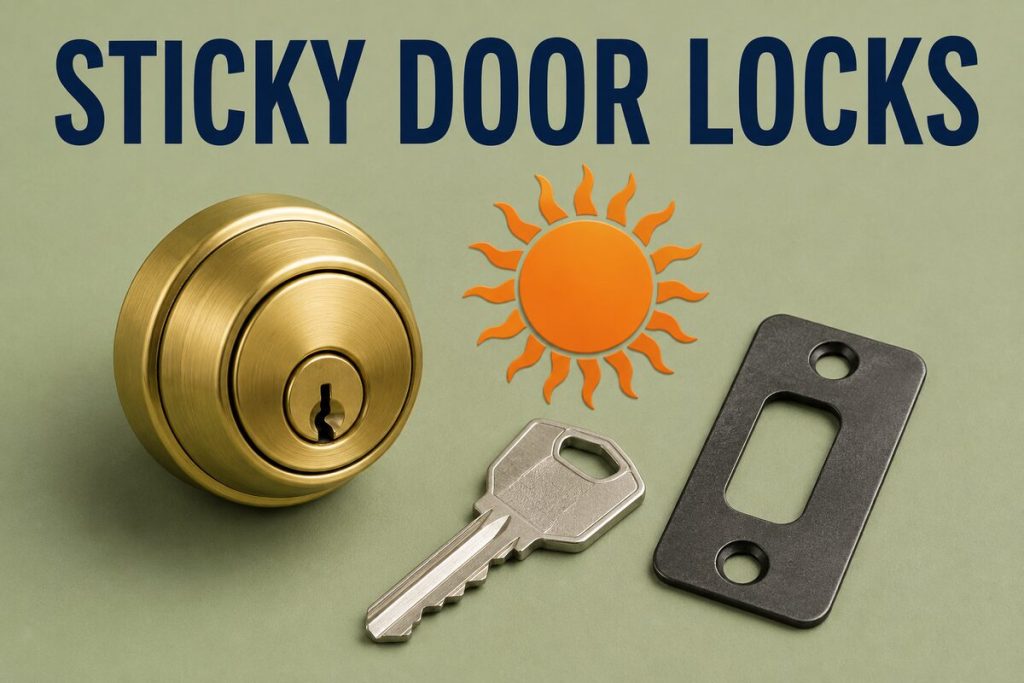
Why Door Locks Stick in Phoenix Heat—and What You Can Do About It
Door locks are mechanical systems with tight tolerances. A small shift in door alignment, debris in the keyway, a worn key, or a weakened internal part can make normal operation feel difficult. Heat may contribute to some of these conditions, but temperature alone is not always the cause.
Consider when the problem appears. Does the key enter normally but resist turning? Does the deadbolt turn with the door open but bind when the door is closed? Does the latch scrape the strike plate? Does the issue affect one key or every key? These details help narrow down what needs attention.
For help with an on-site diagnosis, see residential locksmith services and Locksmith in Phoenix AZ.
Heat Can Affect Door and Frame Alignment
Door locks on exterior doors are exposed to direct sunlight and major temperature changes. Different materials can expand, contract, or move differently. Wood can react to moisture and heat, while metal hardware and frames can shift slightly. Over time, even a minor alignment change can place pressure on a latch or deadbolt.
A common sign is a deadbolt that works with the door open but becomes difficult to lock once the door is shut. The bolt may not be lining up with the opening in the strike plate. Turning the key with extra force can wear the key, strain the cylinder, or damage internal lock components.
If the issue is related to the door or hardware condition, residential lock repair can help determine whether adjustment, repair, or replacement is appropriate.
Dust and Debris Can Interfere With the Keyway
Phoenix dust can find its way into door locks and exterior hardware. A keyway can collect fine debris over time, especially on frequently used doors. Dirt inside the cylinder can make a key feel rough when it enters or turns.
Avoid spraying an unknown household oil, adhesive lubricant, or cleaner into door locks. Some products can attract more dust, leave residue, or interfere with the mechanism. Follow the instructions for the specific hardware; Schlage also provides manufacturer guidance for cleaning door locks and hardware. If you use a lock-specific product, follow the manufacturer’s instructions and use only a small amount. When the key still resists turning, professional inspection is appropriate.
Use a clean key and check it for visible bends, cracks, worn cuts, or debris. A damaged key can create symptoms that seem like a failed lock.
A Worn Key May Be the Real Problem
Keys and door locks are used repeatedly, while keys are also carried with other objects and sometimes bent through force. Over time, the cuts on a key can become worn enough that it no longer moves the pins inside the cylinder precisely. A copied key made from another worn key may repeat the same problem.
Try a known-good spare key if you have one. If the spare operates the lock normally, the original key may need replacement rather than the entire lock. If every key has the same problem, the cylinder, alignment, or door hardware may need attention.
For a lock that no longer works reliably, a technician can inspect the full system rather than replacing components without a diagnosis. Review locksmith services for mobile service options.
The Lock Cylinder May Be Worn or Damaged
The cylinders inside door locks contain moving pins, springs, and other parts that work together when the proper key is inserted. Normal use, debris, corrosion, key damage, or a previous attempt to force the lock can affect its operation.
Signs that can point to a cylinder issue include:
- The key catches, turns inconsistently, or will not come out easily.
- The key turns but the deadbolt or latch does not move as expected.
- More than one key has the same problem.
- The cylinder looks loose, damaged, or misaligned.
- The lock problem continues even after the door is positioned differently.
Do not keep applying pressure to a key that is resisting. A broken key inside the cylinder creates a separate repair issue.
Door Hardware and Strike Plates Need Attention Too
The key cylinder is only one part of a working door lock. A deadbolt must extend freely into the strike opening, and the latch must meet the strike plate at the correct position. Loose hinges, worn screws, a shifting frame, or a misaligned strike plate can cause binding.
When diagnosing door locks, gently test the deadbolt or latch with the door open. Then close the door and test it again without forcing it. A change between those two tests suggests that door alignment may be contributing to the problem.
Never enlarge a strike opening or move hardware without understanding the door’s construction and security needs. An incorrect adjustment can reduce the lock’s effectiveness or create a larger repair need.
Safe Steps You Can Take Before Calling
- Check whether a spare key works better than the everyday key.
- Look for obvious damage, a bent key, loose screws, or visible misalignment.
- Test the deadbolt with the door open, then gently with the door closed.
- Remove visible dust from around the exterior hardware with a dry cloth.
- Stop if the key feels as if it may bend or break.
Do not pry the door, force the key, or use improvised tools in the keyway. If the door cannot be opened, visit house lockout service.
Repair, Rekey, or Replace: Which One May Fit?
The right service for door locks depends on what the technician finds. A lock repair may address a worn or damaged component. Rekeying may be appropriate when the lock hardware is working but key access needs to change. Replacing hardware can make sense when the lock is damaged beyond repair or no longer meets the property’s needs.
If you moved into a home or lost a key, see residential lock change. For a planned upgrade at the main entry, front door lock installation explains available service options.
For business properties, review commercial locksmith services or commercial rekey service when entry access needs to be evaluated.
Preventive Habits for Phoenix Exterior Locks
To protect door locks, use the correct key, avoid hanging heavy keychains from a key in the lock, and arrange an inspection when the lock begins to bind. If a door needs pressure to lock, do not treat that as normal.
To keep door locks working as intended, periodically check that hinges, screws, strike plates, and door hardware appear secure. Keep the keyway area free of obvious debris. West Phoenix Locksmith offers mobile service throughout the Phoenix service area. Learn more on the About West Phoenix Locksmith page.
Sticky Door Locks in Phoenix FAQs
Can Phoenix heat make a door lock stick?
Heat can contribute to changes in door and frame alignment. A sticking lock can also be caused by dust, a worn key, a damaged cylinder, or strike-plate alignment.
Why does my deadbolt work when the door is open but not closed?
This can indicate that the deadbolt is not lining up with the strike opening when the door is closed. Avoid forcing the key or thumbturn.
Should I force a key that is hard to turn?
No. Excess pressure can bend or break the key and may damage the lock cylinder.
Can dust affect my exterior door lock?
Yes. Fine debris can collect in a keyway and affect how the key enters or turns. Use only lock-appropriate products according to their instructions.
How can I tell if the key is the problem?
Try a known-good spare key. If it works normally, the everyday key may be worn or damaged.
Should I use household oil in a sticky lock?
Avoid using an unknown household oil or cleaner. Some products can leave residue or attract debris inside the lock.
Can loose hinges cause a lock to bind?
They can. Loose hinges or movement in the door and frame may affect alignment between the latch or deadbolt and strike plate.
Does a sticking lock always need replacement?
No. The appropriate solution depends on the cause. A repair, adjustment, rekey, or hardware replacement may be considered after inspection.
What should I do if my key breaks in the lock?
Do not push the broken piece farther into the keyway. Call a locksmith to inspect the cylinder and remove the key fragment.
How do I request door lock service in Phoenix?
Call West Phoenix Locksmith at (623) 258-4648, explain the lock symptoms, and provide the Phoenix location where you need service.
Final Thoughts
Why door locks stick in Phoenix heat—and what you can do about it may involve temperature, door alignment, dust, a worn key, or an aging lock cylinder. Avoid forcing the hardware. Check the difference between open-door and closed-door operation, try a good spare key, and arrange an inspection if the problem continues.
For mobile lock repair, access assistance, or door lock service in Phoenix, call West Phoenix Locksmith at (623) 258-4648.