

Residential lock maintenance Phoenix homeowners perform should focus on door alignment, smooth key operation, secure mounting, clean hardware, and early signs of wear. Phoenix heat, dust, direct sunlight, and seasonal movement can affect exterior doors and make a lock feel different even when the cylinder itself is still functional.
A maintenance check does not require forcing the keyway, dismantling the cylinder, or spraying an unknown product into the lock. The goal is to observe how the door, latch, deadbolt, key, and trim work together and identify conditions that should be inspected by a locksmith.
Why Residential Lock Maintenance Phoenix Homes Need Is Different
Exterior doors in Phoenix face prolonged heat, airborne dust, and strong sunlight. A metal door or frame can expand during the hottest part of the day, while wood doors can shift with changes in temperature and moisture. These movements may alter the relationship between the bolt and strike plate.
A lock that works in the morning but binds later may be reacting to door movement rather than a damaged key. Similarly, a latch that only catches when the door is pulled or pushed may point to alignment, hinge, or weatherstrip pressure. Residential lock maintenance Phoenix residents can use as a routine starts by observing when and how the symptom occurs.
9 Essential Residential Lock Maintenance Checks
1. Test Every Authorized Key
Use each authorized key without applying excessive pressure. A key should enter fully and rotate without bending. Compare copies with an original key when available. A heavily worn, cracked, twisted, or poorly duplicated key can create symptoms that look like cylinder trouble.
2. Check the Deadbolt With the Door Open
Extend and retract the deadbolt while the door is open. If it moves normally when open but binds when closed, alignment is more likely than an internal lock failure. Do not repeatedly force a bolt that is rubbing the strike plate.
3. Observe the Latch and Strike Plate
Close the door normally and notice whether the latch enters the strike opening without lifting, pushing, or pulling the door. Look for fresh scrape marks around the strike plate. Those marks can help identify the direction of movement.
4. Inspect Hinges and Mounting Screws
Loose hinges can allow the door to sag and move the latch or deadbolt away from the intended opening. Check for visible gaps, movement, or loose trim. Homeowners should avoid overtightening decorative screws or disassembling lock components without the correct instructions.
5. Clean Exterior Hardware Carefully
Remove surface dust with a soft cloth. For compatible finishes, use a lightly dampened cloth and immediately dry the hardware. Do not spray cleaner directly into the keyway or electronic keypad. Schlage’s official door-hardware cleaning guidance recommends gentle cleaning and warns against spraying or immersing hardware in liquid.
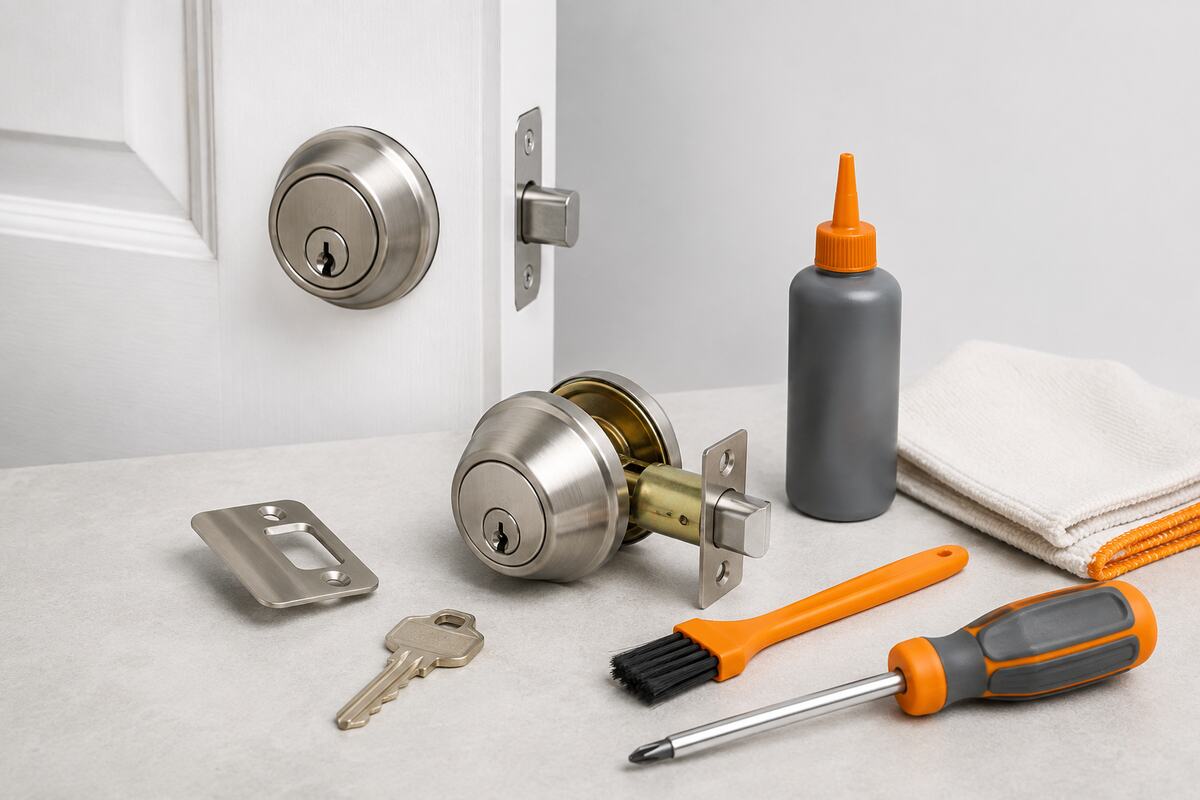
6. Use Only Manufacturer-Approved Lubrication
Lock products differ. Some manufacturers specify a particular dry lubricant or maintenance procedure, while electronic locks may have additional restrictions. Review the manual for the exact model. Avoid household oil, cooking spray, or products that can collect dust inside the keyway.
7. Review Weatherstripping Pressure
New, swollen, or displaced weatherstripping can push the door away from the frame. If the lock works only when pressure is applied to the door, weatherstripping and alignment should be considered together. Do not enlarge a strike opening before confirming the cause.
8. Check Smart-Lock Batteries and Motor Resistance
Follow the lock manufacturer’s battery specifications and replace batteries as a complete matching set. If the motor sounds strained or repeatedly reverses, test whether the deadbolt moves freely with the door open. Review the guide to smart lock batteries in Arizona heat for related conditions.
9. Review Key Control After Household Changes
Maintenance also includes knowing who has working keys. A move, lost key, former occupant, contractor visit, or household change can create a reason to discuss rekeying. Rekeying changes which key operates the cylinder without automatically replacing every part of the lock.
Residential Lock Maintenance Phoenix Checklist
| Check | Normal Condition | Reason to Request Inspection |
|---|---|---|
| Key operation | Key enters and turns without bending. | Binding, cracking, heavy wear, or inconsistent copies. |
| Deadbolt | Bolt extends freely with the door open and closed. | Rubbing, partial extension, or pressure needed on the door. |
| Latch | Latch enters the strike without lifting or pulling. | Fresh scrape marks or repeated failure to latch. |
| Door and hinges | Door remains level with secure hinges. | Sagging, loose screws, shifting gaps, or frame movement. |
| Exterior finish | Hardware is clean, dry, and firmly mounted. | Corrosion, peeling finish, loose trim, or visible damage. |
| Smart lock | Motor completes a normal cycle without resistance. | Repeated reversals, battery warnings, or rejected credentials. |
When Maintenance Is Not Enough
Cleaning and observation cannot correct every problem. A cylinder with damaged internal components, a fractured key, a bent latch, a worn deadbolt, or impact damage may require professional repair or replacement. If a key is difficult to turn, stop before it bends or breaks.
A locksmith can evaluate the key, cylinder, latch, bolt, strike plate, hinges, and door alignment as one system. Depending on the cause, the appropriate response may involve adjustment, residential lock repair, rekeying, or an approved hardware replacement.
Seasonal Home Lock Checks in Phoenix
Residential lock maintenance Phoenix homeowners schedule can be tied to changes in weather and household use. Test exterior locks before the hottest months, after major door or weatherstrip work, and whenever a key begins behaving differently.
- Inspect high-use exterior doors for new rubbing or alignment changes.
- Test spare keys before storing them for authorized use.
- Review smart-lock battery guidance and authorized access codes.
- Check that doors close and latch without being slammed.
- Confirm that decorative trim and handles remain secure.
- Document recurring symptoms, including the time of day and affected key.
What Not to Do to a Residential Lock
Do not force a key with pliers, insert wire or improvised tools into the keyway, strike the cylinder, flood the lock with liquid, or repeatedly activate a smart-lock motor against a binding deadbolt. These actions can turn an alignment or key problem into damaged hardware.
Do not assume that every difficult lock needs replacement. Residential lock maintenance Phoenix service should begin with an accurate diagnosis. The condition of the key, door, frame, strike, latch, cylinder, and electronic components determines which correction is appropriate.
Final Thoughts
Residential lock maintenance Phoenix homeowners can perform begins with observation: test authorized keys, compare open-door and closed-door operation, inspect alignment, keep surfaces clean, follow manufacturer instructions, and respond to changes before forcing the hardware.
When a lock binds, a bolt does not align, a key shows damage, or a smart lock repeatedly struggles, request an inspection. The correct solution may be an adjustment, repair, rekey, or replacement based on the actual condition of the door and lock.
Residential Lock Maintenance Phoenix FAQs
How often should residential locks be checked?
Check exterior locks whenever operation changes and include them in routine seasonal door inspections. High-use doors may show alignment or key wear sooner than doors used less often.
Why does my deadbolt work when the door is open but not closed?
This commonly points to alignment between the bolt and strike plate, door movement, hinge position, or weatherstrip pressure. Avoid forcing the bolt and request an inspection if the cause is unclear.
Can I use household oil inside a door lock?
Do not use an unspecified household product. Follow the lock manufacturer’s instructions for the exact model because the wrong lubricant can retain dust or affect internal components.
What causes a residential key to become difficult to turn?
Possible causes include key wear, a poor duplicate, debris, cylinder wear, door pressure, bolt misalignment, or damaged hardware. Compare operation with another authorized key without applying excessive force.
Should a worn key be duplicated?
A heavily worn or bent key may produce an inaccurate copy. Have the key and lock evaluated and use an approved original or key specification when available.
Why does my front-door latch need pressure to close?
The door may be sagging, the strike may be misaligned, or weatherstripping may be pushing the door away from the frame. Repeatedly slamming the door can worsen the condition.
Does Phoenix heat affect residential door locks?
Heat can contribute to expansion and door or frame movement. Direct sunlight can also heat exterior hardware. The complete door system should be checked when operation changes with temperature.
What should I check on a residential smart lock?
Use the specified batteries, confirm the deadbolt moves freely, inspect door alignment, and review authorized codes and connectivity settings. Repeated motor resistance should not be ignored.
When should a homeowner consider rekeying?
Rekeying may be considered after a lost key, move, change in authorized occupants, or another key-control concern. Confirm that the existing hardware is suitable for rekeying.
When should I call a residential locksmith?
Call when a key is bending, a cylinder binds, a deadbolt does not align, the latch repeatedly fails, hardware is loose or damaged, or a smart lock cannot complete normal operation.
Request Residential Lock Assistance
For help with a binding lock, damaged key, misaligned deadbolt, unreliable latch, or residential smart-lock issue in Phoenix, call West Phoenix Locksmith at (623) 258-4648, email info@westphoenix-locksmith.com, or use the contact page.